
Personal Finance Tips for Beginners: Start Money Smart in 2026
The best personal finance tips for beginners share one trait: they lower the barrier to entry. If money has felt confusing or stressful, you are far from alone. In 2026, a wave of first-time savers is learning that a few simple moves beat a hundred complicated ones.
I remember starting with zero system and a chaotic checking account. What turned things around was not a spreadsheet but a handful of tiny, repeatable habits. This guide hands you those habits so you can skip the trial and error.
Personal Finance Tips Every Beginner Should Master First
Foundations beat tactics. Before chasing high-yield accounts or investing hacks, nail the basics that stabilize your money. Everything else builds on these.
Start by knowing exactly what comes in and what goes out each month. Awareness alone changes behavior. The U.S. government offers free, unbiased planning resources, and you can explore them at the official portal on USA.gov for trustworthy starting points.
Next, open a separate savings account. Keeping savings out of sight from spending money removes daily temptation. That physical separation is small but powerful.
What Is the First Money App a Beginner Should Try?
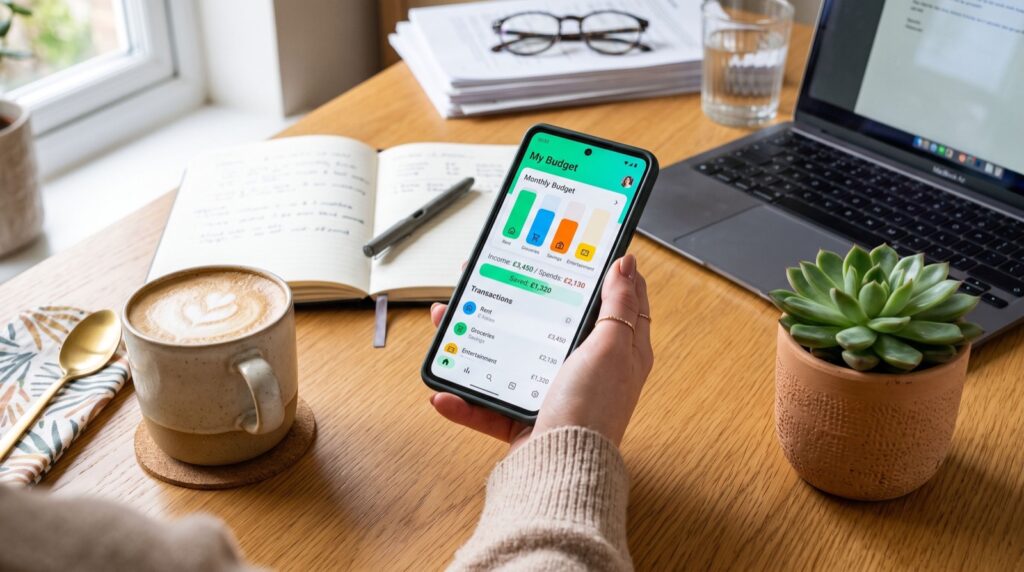
Newcomers often ask which tool to download first. My answer is a simple all-in-one wallet that handles transfers and light saving. You want fewer apps doing more, not a cluttered phone screen.
A gentle on-ramp is a well-reviewed personal finance tips resource that pairs plain-English advice with app suggestions. From there, many beginners graduate to the best money apps for automating savings and tracking spending in one place.
The point is not the brand of app. The point is picking one, using it consistently, and letting automation carry the load.
A Simple Money Roadmap for Your First 90 Days
Beginners thrive with a clear sequence. Here is the exact order I recommend for the first three months, one small step at a time.
- Weeks 1-2: Track spending and list every recurring bill.
- Weeks 3-4: Open a dedicated savings account and set a small automatic transfer.
- Weeks 5-8: Cancel one unused subscription and redirect that money to savings.
- Weeks 9-12: Build a starter emergency fund and set up bill autopay.
Notice how gentle this is. Each step takes minutes, yet by day 90 you have a working system that most people never build at all.
Beginner Tools Compared
Choosing your first tools is easier with a side-by-side view. This table highlights what matters most when you are just starting out.
| Tool Type | Main Job | Difficulty | Cost |
|---|---|---|---|
| Payment app | Send and receive money | Very easy | Free |
| Budgeting app | Track spending | Easy | Free to low |
| High-yield savings | Grow your cushion | Easy | Free |
| Round-up investor | Invest spare change | Easy | Low fee |
You do not need all four on day one. Add them as your confidence grows, and let each new tool solve one specific problem.
Avoiding the Mistakes New Savers Make
Beginners tend to stumble in predictable ways. The biggest is trying to do everything at once and burning out within a week. Slow and steady genuinely wins here.
Another common trap is ignoring small fees. A few dollars in instant-transfer charges or forgotten subscriptions add up to real money over a year. Auditing these quarterly keeps leaks under control.
Here is an original tip I stand by: name your savings account after your goal. A cushion labeled “Peace of Mind Fund” is psychologically harder to raid than a generic “Savings 2” account. Small framing, big behavior change.
When Should Beginners Start Investing?
Start investing once you have a small emergency cushion and no high-interest debt eating your progress. You do not need thousands to begin. Many apps let you start with a single dollar through fractional shares.
Keep it boring on purpose. Broad, low-cost index funds beat chasing hot tips for almost every beginner. Time in the market matters more than clever timing.
Consistency beats intensity here. Investing a small, fixed amount every month smooths out the ups and downs of the market. This approach, often called dollar-cost averaging, removes the pressure of guessing the perfect moment to buy.
Do not let fear of loss keep you on the sidelines. Every experienced investor started as a nervous beginner. The habit of investing regularly, even in tiny amounts, is what builds real wealth over the years.
Staying Motivated on Your Money Journey
Progress feels slow at first, which trips up many beginners. I recommend tracking small wins in a simple note on your phone. Watching your savings climb, even by twenty dollars a week, keeps the momentum alive.
Share your goals with a trusted friend for accountability. Talking about money openly removes shame and makes good habits easier to keep. By late 2026, those steady habits will have quietly reshaped your entire financial picture.
If you would rather have hands-on guidance, our dependable specialists publish detailed setup walkthroughs. You can reach the dependable specialists for related technical support when you need it.
Frequently Asked Questions
How much money do I need to start budgeting?
None. Budgeting is about organizing the money you already have. Even if your income is small, a simple plan helps every dollar work harder for you.
Are money apps safe for beginners?
Reputable apps use encryption and fraud protection. Stay safe by enabling PIN or biometric locks, turning on transaction alerts, and never sharing your login codes with anyone.
How fast can I build an emergency fund?
Start with a goal of five hundred to one thousand dollars. Automating even twenty dollars a week reaches that first milestone within a year, often much sooner with a spare cash boost.
Should beginners use a credit card?
A credit card can build your credit score if you pay the balance in full each month. If overspending is a risk, stick with a debit card until your habits are solid.
Final Thoughts on These Personal Finance Tips
Starting your money journey does not require expertise, only a willingness to take small steps. These personal finance tips for beginners turn a scary topic into a series of easy wins.
Pick step one from the 90-day roadmap and act on it today. By the time 2026 wraps up, you will look back amazed at how far a few tiny habits carried you.